 Luminomania

Light therapy: a new study confirms the benefits of morning blue light
Does light therapy really work? Does the circadian rhythm theory hold up? A brand-new study, Rise and shine: Morning blue light exposure, sleep, and work (Keeler, K. R., Barnes, C. M., Huang, Y., Gunia, B. C., & Moy, J. H., 2026), has just been published in the Journal of Applied Psychology, one of the most respected and rigorous journals in behavioral and organizational science.
We already know that blue light should be dialed down in the evening. This study set out to answer the flip side of that question: what does morning exposure to the same light do for your sleep quality and your performance at work?
The protocol: 182 employees wearing light therapy glasses
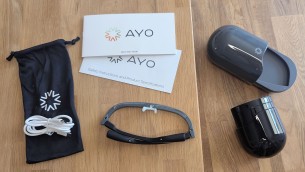 How much do the AYO+ glasses used in the study cost?
For two weeks, 182 employees spent 30 minutes every morning exposed to blue light from light therapy glasses. Ninety-one of them received 1% intensity, while the other half received the full 100%. Participants weren't told about this difference, so none of them knew whether they were in the control group or the test group.
What the study found: better sleep, less fatigue
From the very first night, morning blue light exposure improved sleep quality. That better sleep left participants more alert the next day and less tired. And it set off a chain reaction: less exhaustion at work led to higher work engagement.
Poor sleepers and younger employees: the biggest winners
Here's an interesting detail: employees who already had sleep problems saw the best results. Younger participants made the biggest gains in how well they performed their tasks at work. And the effect lasted a full 24 hours.
What the researchers concluded
The study's conclusion couldn't be clearer. According to the researchers, wearing glasses that emit blue light is a simple, cost-effective intervention that organizations can implement to support employee performance, especially among younger workers and those who already struggle with sleep.
They also urge organizations to consider both sides of the circadian equation: not only limiting blue light exposure in the evening, but also actively encouraging it in the morning.
The glasses used in the study: AYO+
The light therapy glasses used in the study were the AYO+. They're the glasses I use myself, and I'd already noticed their positive effect on me. Now a study backs it up! AYO works closely with scientists, and their decision to use 470 nm blue light (rather than the white light found in some other glasses) looks like the right call.
Want to feel the difference for yourself? Order the AYO+ glasses directly from the manufacturer.
Further reading
- The benefits of light therapy
- Light therapy risks and contraindications
- How many lux for light therapy?
- Light spectrum in light therapy
- Light therapy glasses and jet lag: reset your body clock faster
- Clocks Go Back 2026: How to Change the Time and Adjust
Affiliate links: a purchase through these links earns me a small fee, at no extra cost to you.