 Luminomania

Light therapy lamp or glasses: which should you choose?
When you first discover light therapy, one question always comes up: is it better to invest in a lamp or a pair of light therapy glasses? Both solutions work on the same principle: exposing the eyes to artificial light to compensate for a lack of natural light. But the experience, comfort and perceived effectiveness can vary depending on your lifestyle.
Having tested both formats over several weeks, I'm sharing a clear comparison to help you make the right choice based on your daily routine, budget and goals.
A quick refresher: how does light therapy work?
Light therapy involves daily exposure to white, cool-toned light in order to regulate your internal clock. It's primarily used for:
- seasonal affective disorder (SAD);
- sleep disorders;
- fatigue;
- disrupted rhythms (night shifts, jet lag).
In reality, light therapy isn't only useful in winter. If you read how I came to light therapy, you'll see it was my perpetually dark apartment that led me there, all year round.
In summer, the sun is higher and doesn't always shine through windows directly. Depending on a flat's orientation and surroundings (especially in cities), an apartment can sometimes actually be darker in summer.
Whether you choose a lamp or glasses, the goal is the same: send a light signal to the brain to suppress melatonin and stimulate wakefulness.
Light therapy lamps
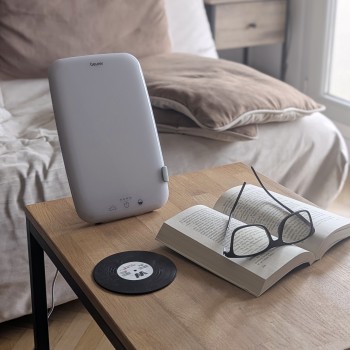
This is the classic, most widely used format. The lamp emits powerful light that you receive indirectly by sitting in front of it, typically in the morning.
Advantages
- High output (often 10,000 lux)
- Short sessions (20 to 30 min)
- Comfortable, wide light surface
- Often more affordable
Disadvantages
- You have to stay still
- Not ideal for busy mornings
- Difficult to transport
I used the Beurer TL35 a lot before I got my glasses. But it's not necessarily the model I'd recommend. If you want to know why: my full review of the Beurer TL35.
If I were buying one today, I'd pick the Beurer TL95 (check its price on Amazon). It's just as compact, but its 14,000 lux let you set it further away and get on with something else during your session.
Light therapy glasses
A more recent format, glasses use advanced technology to deliver light without glare.
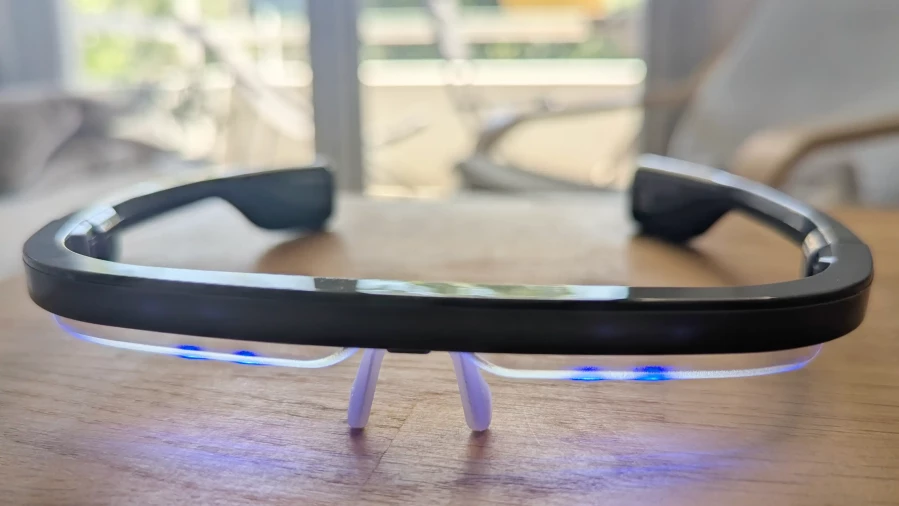
Advantages
- Total mobility during sessions
- Can be worn while working or moving around
- More flexible sessions
- Ideal for busy schedules
Disadvantages
- Higher price
- Unusual sensation at first
- Limited battery life
If you want to dig deeper, I've written up my full experience in my review of the AYO glasses.
Effectiveness: lamp or glasses?
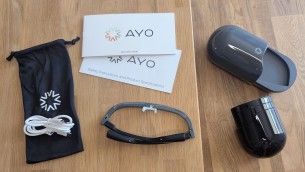 The AYO+ glasses I use, best price on the manufacturer's website
In terms of raw effectiveness, both technologies are broadly comparable, as long as the light intensity received is sufficient.
The real difference comes down to consistency of use:
- A very powerful lamp used every other day will be less effective
- Slightly less powerful glasses worn every morning will deliver better results
In other words: the best device is the one you'll actually use.
Comfort of use
This is where the gap really shows.
| Criterion | Lamp | Glasses |
|---|---|---|
| Mobility | Low | ✓ Excellent |
| Visual comfort | ✓ Very good | Good |
| Ease of use | Simple | ✓ Very simple |
| Portability | Difficult | ✓ Easy |
Budget: big difference?
Yes, quite significant.
- Lamp: €60 to €150
- Glasses: €180 to €290
Glasses cost more because the technology is miniaturised and portable.
Which to choose based on your lifestyle?
Choose a lamp if:
- You have breakfast at a fixed time each day
- You work from home
- You're looking for a budget-friendly option
In that case, the lamp I'd recommend is the Beurer TL95, available on Amazon.
Choose glasses if:
- You're often on the go
- Your mornings are hectic
- You want a flexible, versatile solution
My verdict after using both
As you probably know by now, my first purchase was a light therapy lamp. Then, to get around its limitations, I got the glasses. Since then, I've only used the glasses.
The mobility they offer is essential to me, and they deliver better results by letting me complete full sessions without wasting my time. What more could you ask for?
If you want to know more about why I made that choice:
Affiliate links: a purchase through these links earns me a small fee, at no extra cost to you.