 Luminomania

My experience with light therapy: from a dark apartment to a real daily transformation
If I'm so passionate about light therapy today, it's simply because I needed it.
I didn't discover it through a book or an ad, or because it was trending. It all started much more concretely, in my own apartment!
Living in a dark apartment...
I spent several years living in a flat where natural light was extremely limited. Even in the height of summer, the apartment stayed dark: the sun was too high to shine directly into the main rooms. There was really no difference between winter and summer.
Over time, my mood took a hit, and I started to notice several things:
- persistent fatigue;
- a general lack of energy;
- restless, unrefreshing nights;
- a feeling of "brain fog" every morning when I woke up.
It crept in gradually and I ended up just living with it, thinking it was normal. But looking back, I realised just how much the lack of light had been affecting my overall wellbeing. Having to keep artificial lights on in the middle of the day wasn't a satisfying solution.
My first fix: making my apartment brighter
Before turning to light therapy, I wanted to improve what I already had, so I decided to repaint my entire apartment. At the time, the walls were in fairly dark shades: beige, lavender... Visually warm but useless for reflecting light.
I repainted every room white. The change was remarkable:
- much more brightness;
- the rooms felt bigger;
- the whole place felt lighter and more airy.
But despite this improvement (which I really felt at first), the natural light was still not enough.
Discovering light therapy
That's when I started looking into light therapy.
At first, I was skeptical: it felt more like a marketing gimmick to me. A lamp that replaces the sun? But then I started digging deeper, and I entered a pretty intense research phase. When something catches my interest, I like to get to the bottom of it and can spend entire days making sure I make an informed choice (get it? 😁). I consulted all kinds of:
- lamp comparisons;
- user reviews;
- specialist forums;
- customer feedback;
- technical data (lux, UV, distance...).
In short, hours and hours spent sorting through sometimes contradictory information.
Buying my first light therapy lamp
After extensive research, I finally settled on a specific lamp.
My goal was simple:
- sufficient light intensity;
- a compact form factor;
- easy to use every day.
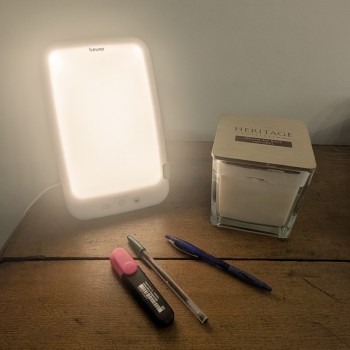
I used that lamp for years and still occasionally turn it on.
I go into full detail in my review: my review of the light therapy lamp I use .
My daily routine with the lamp
I quickly built the lamp into my morning routine. Every morning for 20 to 30 minutes while I work. Sometimes even in bed, before getting up.
The effects started to appear gradually. Not overnight, but clearly and noticeably over the course of a few days.
The first effects I noticed
This is personal, but here's what I observed:
- waking up felt easier;
- a sense of energy I hadn't felt in a long time;
- less fatigue;
- better concentration, especially in the morning.
Nothing dramatic, but a noticeable enough improvement to keep using the lamp regularly and to really appreciate how much light matters in everyday life.
I've written more about all the benefits I experienced here: the benefits of light therapy, based on my own experience .
Why I then bought light therapy glasses
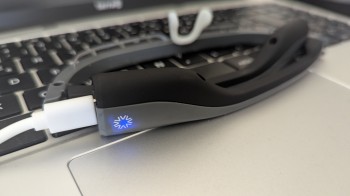
For a long time, the lamp was enough. But I eventually got tired of having to stay close to it to get any benefit.
The concept intrigued me: receiving light directly through the visual field while staying mobile. I hesitated for several months before finally taking the plunge. And I'm so glad I did. Absolutely no regrets!
How I use the glasses every day
Unlike the lamp, the glasses give you total freedom. They slotted into my routine much more naturally.
I use them:
- while working at my computer;
- while reading;
- in the morning while getting ready.
My full review: my review of the light therapy glasses .
Lamp or glasses: my take after using both
Having used both solutions over time, I can say they complement each other well.