 Luminomania

Luminette 3 review: effectiveness, pros and cons
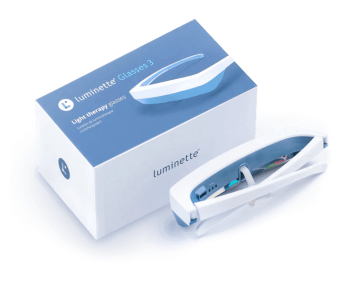
Unboxing the Luminette 3
Opening the box, you'll find:
- a protective case;
- a USB-C cable;
- a microfibre cloth;
- a user manual;
- a warranty certificate;
- and of course, the glasses!
First impressions and comfort on the nose
The glasses feel a bit cheap in hand. They're very lightweight, but most of the weight sits at the front, on your nose.
Once on, I don't find they stay in place very well. If you shake your head, or lean forward too much, they tend to slip off. So if you're fairly active, you'll need to be careful.
I'd recommend reading the user manual carefully, as it clearly explains how to position them correctly to get the most out of their benefits. A small initial adjustment is needed.
Features
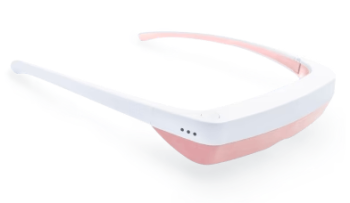
The Luminette was designed to be both effective and comfortable:
- compatible with prescription glasses;
- lightweight (51 grams) and won't hurt your nose;
- doesn't get in the way of your vision thanks to indirect light diffusion;
- comes with a charging indicator;
- compliant with international standard IEC62471 on photobiological risks and classified as "risk-free" for the eyes.
These glasses are white and come in three accent colours: blue, pink and green.
How effective is the Luminette 3?
I put my glasses on as soon as I walk into the kitchen. My session starts as I'm getting breakfast ready. It continues while I eat, brush my teeth, and start working.
I hadn't used my lamp for a few weeks before switching to the Luminette. I can say without hesitation that it's effective, because I got back that same feeling of wellbeing and energy I had with the lamp. I feel more awake, more focused and in a better mood in the morning.
I didn't have any adjustment issues, which some users mention. Maybe because I was already used to light therapy? Either way, the Luminette offers several light intensities, so you can start on a lower setting and gradually build up if you're sensitive to it.
It took me a while to start wearing them at work on days I wasn't working from home, because let's be honest, it's not always easy to feel confident wearing them in public.
But like anything, once you've taken that first step, it becomes natural. You just have to accept being a bit of a curiosity for the first few days, with everyone asking you 100 questions 😁
The advantages of the Luminette 3
✔ The price
Light therapy glasses can be quite expensive, but the Luminette 3 is a more affordable option than other high-end models. That's a real plus if you want to try glasses without breaking the bank (check its price on Amazon).
✔ The USB-C cable
They're easy to charge thanks to a USB-C cable, which is handy and universal.
Downsides to be aware of

✖ The design
Of course, this is very personal, but I don't find that thick band of plastic above the eyes especially attractive. It's something to consider if you plan on wearing them in public. Compared to the AYO glasses, they do feel quite cheap.
✖ Stability on the nose
I find they don't stay in place very well on the nose. If you stay fairly still, you won't have any issues, but if you move around a lot, they can slip. On top of that, my nose marks easily, and after several days of use I get a red mark. It's not painful, but it's worth knowing if you have sensitive skin.
My final verdict
Does the Luminette live up to its promises? For me, yes. It offers a modern, flexible solution that's particularly well suited to busy lifestyles. Personally, that's what matters most to me, but it's up to you to decide what counts most for you.
That said, I'm not a fan of the look, the weight or the stability.
It doesn't quite match up to the AYO glasses, which are admittedly more expensive, but offer a better user experience and a much nicer look.
If your budget is tight, it's still a good way in: check the Luminette 3 on Amazon.
For my part, I have to admit I barely use my lamp anymore since getting glasses, which are unbeatable on busy mornings.
If you're torn between glasses and a lamp, check out my lamp vs glasses comparison.
My other reviews
Affiliate links: a purchase through these links earns me a small fee, at no extra cost to you.